How to Get Rid of Bugs Like a Pro Without Paying a Pest Control Company Hundreds Of Dollars Per Year
For home dwellers who are tired of guessing, spraying, and hoping their bug problem will go away!!

My name is David Nunez, I am an Arizona Pest Control Technician. I created a guide explaining the exact system I use to get rid of bugs in real homes, how to identify the pest, find where they are coming from. How choose the right product , and apply it safely so the problem stops coming back.
The Real Problem Most Homeowners are Dealing with
You’re not failing because you “didn’t spray enough.”
Most Do it yourself pest control fails because people use the wrong approach for the pest — and the wrong type of product in the wrong place.
That’s why the bugs disappear for a day… and then show back up somewhere else.
In my guide, I teach the same foundation I use on every job: identify → inspect → treat.
Not guess → panic → spray everything.
You kill the bugs you see… but the nest/colony stays alive.
You spray a repellent when you needed a non-repellent (and the problem spreads).
You don’t know where to treat, so you waste product and get weak results.
You want it safe for kids/pets, but the label feels like another language.
My Story and Why I Created This Guide
I get approached all the time…
I’ve worked in pest control for years. And everywhere I go, it happens:
someone finds out what I do and asks, “Hey how do I get rid of roaches?” or “What do I do about ants?”
Here’s the honest truth: I can’t responsibly tell someone exactly what to apply without doing a proper inspection first and in some cases it's not as simple as recommending a single product.
In pest control, the details matter — locating where the activity is, where pests are entering from, what kind of pest it is, and what product is appropriate.
And if they’re not a customer, I’m not there to inspect the home, document the situation, and build the right plan.
That’s why people end up stuck in a cycle of buying random sprays and hoping for the best.
So I did the next best thing.
I wrote this guide to help homeowners get professional-level results without having to sign up for hundreds of dollars a year in service contracts. Some people can afford professional service — and that’s great.
But plenty of people just want a clear plan they can follow safely and confidently.

What’s inside The Ultimate Homeowners Pest Control Guide
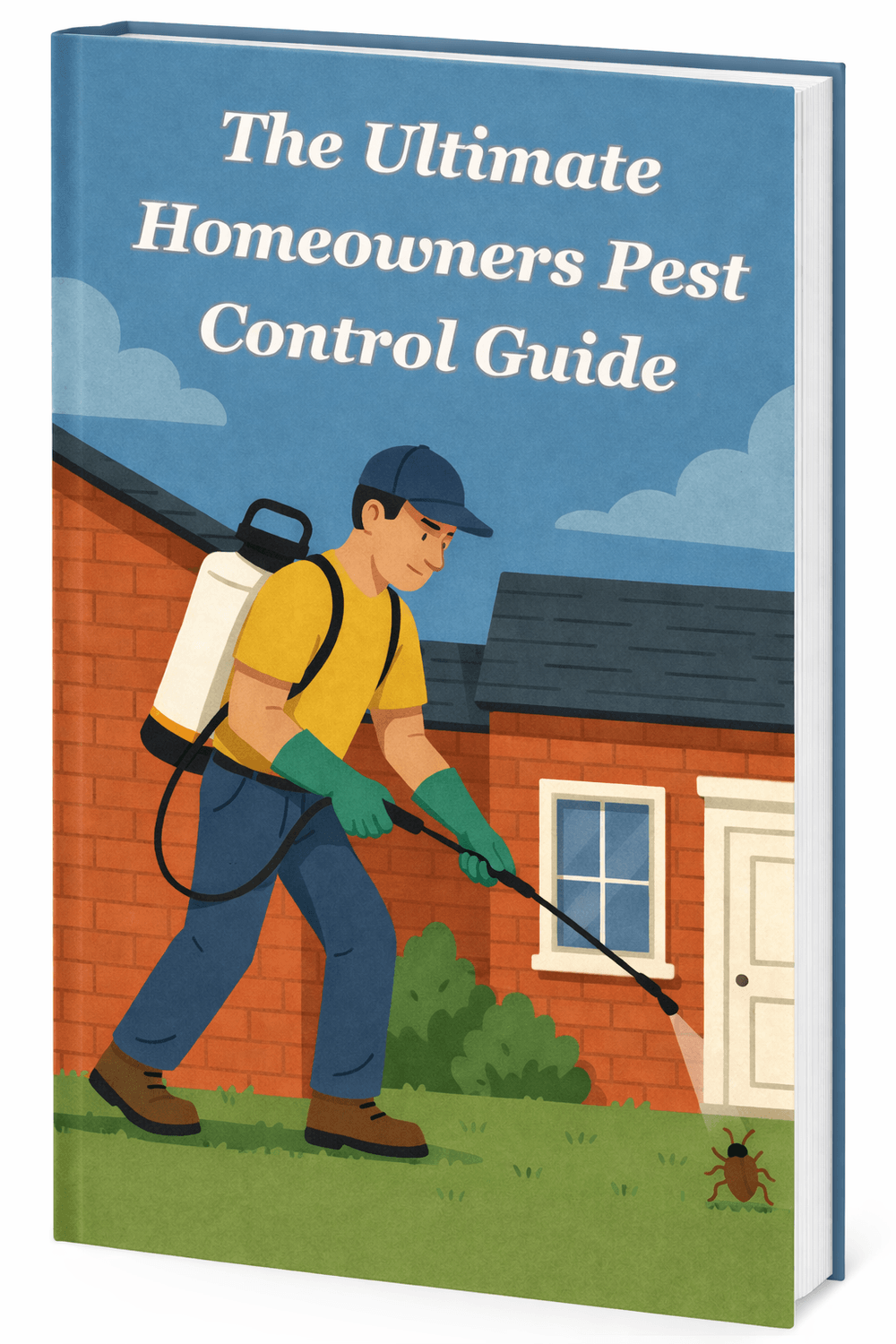
"Over 100 pages" of my proven step-by-step system you can use for the most common household pests
This isn’t just “tips.” It’s a structured plan that covers why pests come inside, how to pick the right product
form, how to use equipment properly, and how to treat specific infestations using the identify → inspect → treat framework.
The foundation (the stuff most people skip)
Which pesticides to use for specific bugs or infestations
Why pests want to be inside your home (food, moisture, shelter)
Pesticide classifications, types, and forms (liquids, dusts, granules, baits)
Equipment you need and what each tool is actually for
Personal Protective Equipment and safety (how to protect your family and apply correctly)
Repellents vs non-repellents (and why it matters)
How to read a pesticide label (explained in a simple way anyone can understand)
The professional approach to infestations
The 3 steps to getting rid of an infestation: Identify → Inspect → Treat
Where to treat inside vs outside (so you stop wasting product)
How to build a strategy you can actually follow (without guesswork)
Preventative treatments vs active infestations (what changes, and why)
What Pests are covered inside of the Guide?
Ants
Roaches
Spiders
Mosquitoes
Termites
Bed Bugs
Fleas
Ticks
Crickets
Silverfish
Earwigs
Carpet Beetles
Gnats
Centipedes & Millipedes
Pill bugs
Sowbugs
Bees
Wasps & Hornets
Flies
Fruit Flies
Rice Weevils
Granary Weevils
Red Flour beetles
Confused Flour
Beetles
Grain Beetles

Here are a few of the strategies you will learn Inside of the Guide
If you’re dealing with ants… here’s what usually goes wrong
Spraying the ants you see rarely gets rid of the colony.
When you spray a visible ant trail with a typical store spray, you are only killing the foragers… but you don’t touch the queen. You have to get rid of the queen in order to get rid of the colony.
That’s why the ants return, or suddenly show up in a new area.
In the guide I walk you through how to eliminate ants using the professional approach:
non-repellent spray treatment, baiting, correct placement inside and outside.
How to find entry points (and what to do if you can’t)
Where to place gel bait so ants actually take it
Where non-repellent treatment works best (baseboards, under sinks, cracks/crevices)
How to handle outdoor colonies (hills, trails, lawns)
If you’re dealing with roaches… you need an integrated plan
Roaches hide, reproduce fast, and get out of control if not treated correctly.
Roaches aren’t a “spray and pray” problem. A real plan is needed and includes an inspection, sanitation, bait placement, growth regulators, and targeted applications.
Blasting your cabinets with repellent sprays will push them deeper into your walls or crack and crevice areas where you cant get to them.
In the guide, I break down where to look, where to treat, and how to avoid the most common mistakes that make roaches worse.
How to identify the type of roach (German vs others) and why it matters
Where to apply (behind appliances, cabinet corners, under sinks, wall void areas)
How gel baits + Insect Growth Regulators + dusts work together for long-term control
When treating roaches why is it best to use a non repellent treatment vs store bought repellent sprays.
For prevention stop bugs before they get into your home:
The best pest control is the one you don’t need to repeat every week.
Most homeowners focus on killing what’s inside — but the biggest wins usually come from preventing entry, removing conditions pests love, and applying targeted perimeter protection.
How to seal common entry points and reduce harborage areas
Where a perimeter treatment matters most (foundation + entry points)
How to keep bugs from returning season after season
How to stay safe and label-compliant while doing it
Who this is for and who it’s not for
This guide is for homeowners who want control — without confusion.
This is for you if:
You are responsible for a home (and you’re tired of guessing what does and doesn't)
You want a plan you can follow without paying recurring service fees
You care about safety for kids, pets, and your living space
You want to stop the problem, not temporarily “knock it down”
This is NOT for you if:
You want a single magic spray that works for every bug
You’re not willing to read labels and follow directions
You have severe structural termite damage and need immediate professional work
You want shortcuts instead of a reliable system

Frequently asked questions
The guide emphasizes how to use Personal Protective Equipment, label reading, targeted application, and re-entry timing.
All the products recommended in the guide are safe when dry. Most water based sprays will dry within 30-45 minutes under normal conditions.
The goal is not to “spray everything,” but to treat the right areas the right way and keep your household safe.
Yes, and that’s often why people buy this. Most store-bought sprays are used in ways that don’t eliminate colonies, don’t hit harborage zones, and sometimes push pests into new areas. I show you how to use the identify → inspect → treat framework so you’re not guessing.
If you buy the guide and decide it’s not for you, you can request a refund within 14 days of your purchase.
You don’t need professional gear to start. I explain common residential equipment like pump sprayers, dusters, bait placement tools, things anyone can purchase at a hardware store, and where each makes sense so you don’t waste money.
Here is what some people are saying about the
Ultimate Homeowners Pest Control Guide

Esther Osborn, Warsaw Indiana
This Guide has been a tremendous wealth of knowledge for me to tackle my pest issues on my own. It is straight forward, and easy to follow. And if anything starts "Bugging Me", I know where to look to find the answers.

Sarah Nunez Walston, Elizabeth City NC
This pest control guide makes it easy for me to deal with any unwelcome guests on my own, so I'm not overpaying for services I don't actually need.
Are you Ready to stop guessing and start treating with a plan.
Download your copy now and get instant access for only $27.
Click on the download button below!
